



LTE4
The leukotriene E4 (LTE4) receptor, now widely recognized as GPR99/OXGR1 and also referred to as CysLT3, is a G protein-coupled receptor that mediates cellular responses to the cysteinyl leukotriene LTE4, a bioactive lipid mediator involved in allergic and inflammatory reactions[1][2]. Mechanistically, LTE4-GPR99 signaling activates predominantly Gq-dependent pathways and can additionally engage Gi signaling, thereby regulating inflammatory responses in epithelial and immune cell populations[2]. The receptor participates in key biological processes associated with type 2 inflammation, bronchoconstriction, eosinophil recruitment, vascular permeability, and airway mucosal responses, linking LTE4 signaling to asthma and other allergic diseases[2][3][4]. Disease relevance is supported by observations that LTE4 levels increase in severe asthma and aspirin-exacerbated respiratory disease, while GPR99 expression in respiratory tissues contributes to inflammatory amplification[2]. Compared with the related cysteinyl leukotriene receptors CysLT1 and CysLT2, which preferentially recognize LTC4 and LTD4, GPR99 displays a distinct functional preference for LTE4 and exhibits substantial sequence divergence, supporting its classification as a separate receptor subtype within the cysteinyl leukotriene receptor family[1][2][5]. For experimental applications, GPR99 serves as a useful model for investigating LTE4-specific inflammatory signaling and for evaluating receptor-targeted therapeutic strategies in allergic disease research[1][3].
References:
- [1]. Kanaoka Y, et al. Identification of GPR99 protein as a potential third cysteinyl leukotriene receptor with a preference for leukotriene E4 ligand. J Biol Chem. 2013 Apr 19;288(16):10967-72. [Content Brief]
- [2]. Liu A, et al. Molecular insights into ligand recognition and signaling of OXGR1. Nat Commun. 2025 Dec 18;16(1):11205. [Content Brief]
- [3]. Lee M, et al. Cysteinyl Leukotrienes in Allergic Inflammation. Annu Rev Pathol. 2025 Jan;20(1):115-141. [Content Brief]
- [4]. Bankova LG, et al. Leukotriene E4 elicits respiratory epithelial cell mucin release through the G-protein-coupled receptor, GPR99. Proc Natl Acad Sci U S A. 2016;113(22):6242-6247.
- [5]. Yokomizo T, et al. Leukotriene receptors as potential therapeutic targets. J Clin Invest. 2018 Jul 2;128(7):2691-2701. [Content Brief]
All Product Categories
-
LTE4 Related Products (7)
Related Products (7)

-
MK-571
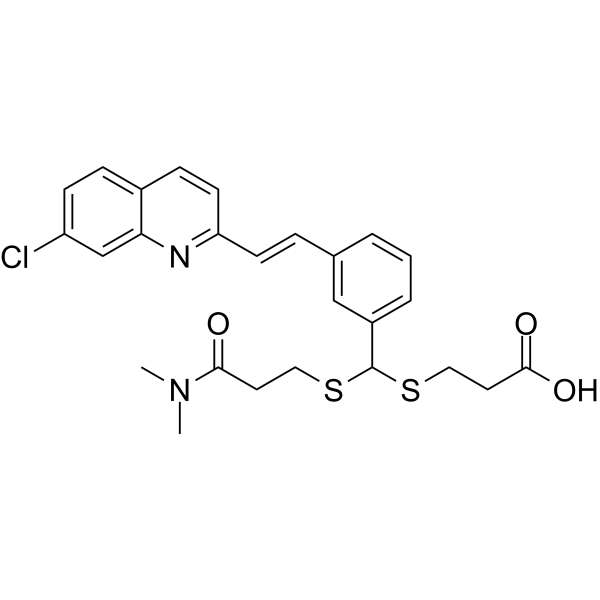 0 ImagesSynonyms: L-660711MK-571 (L-660711) is an orally active, potent and selective competitive leukotriene D4 (LTD4) receptor antagonist, with Ki values of 0.22 and 2.1 nM in guinea pig and human lung membranes, respectively. MK-571 is also a MRP4 and ABCC1 (MRP1) inhibitor. MK-571 inhibits constitutive and antigen-stimulated S1P (sphingosine-1-phosphate) release.
-
MK-571 sodium
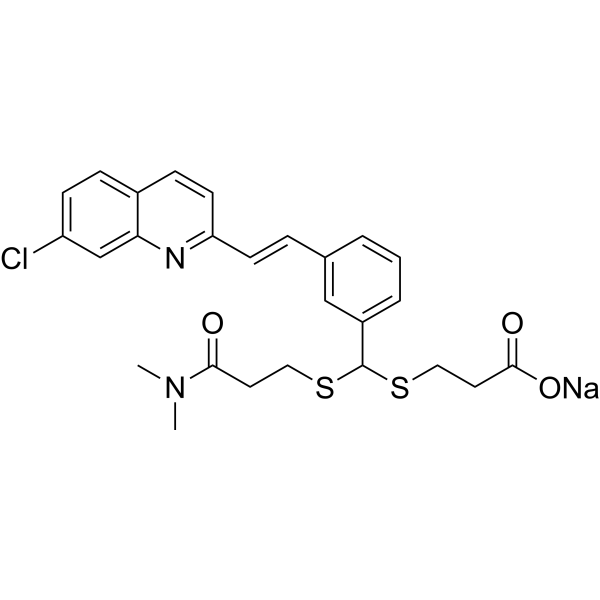 0 ImagesSynonyms: L-660711 sodiumMK-571 (L-660711) sodium is an orally active, potent and selective competitive leukotriene D4 (LTD4) receptor antagonist, with Ki values of 0.22 and 2.1 nM in guinea pig and human lung membranes, respectively. MK-571 sodium is also a inhibitor of multidrug resistance-associated protein MRP4 (ABCC4) and ABCC1 (MRP1). MK-571 sodium inhibits constitutive and antigen-stimulated S1P (sphingosine-1-phosphate) release.
-
Pranlukast
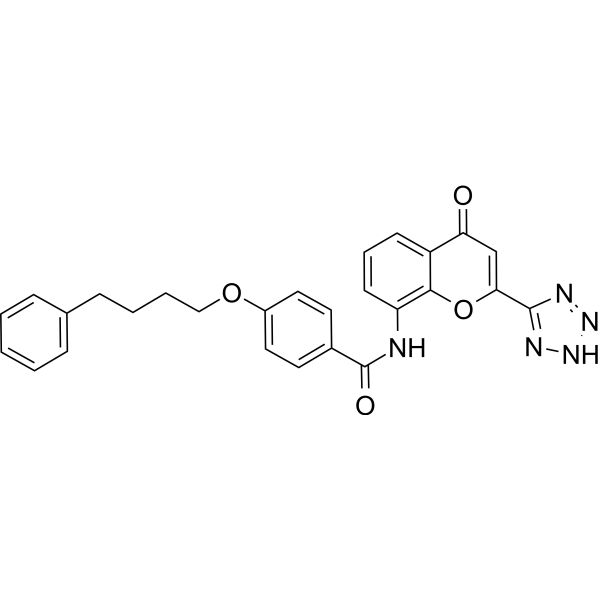 0 ImagesSynonyms: ONO-1078Pranlukast is a highly potent, selective and competitive antagonist of peptide leukotrienes. Pranlukast inhibits [3H]LTE4, [3H]LTD4, and [3H]LTC4 bindings to lung membranes with Kis of 0.63±0.11, 0.99±0.19, and 5640±680 nM, respectively.
-
Tipelukast
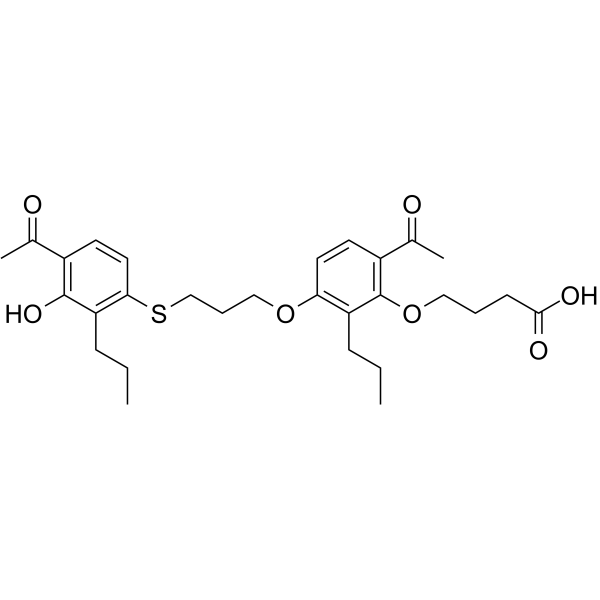 0 ImagesSynonyms: KCA 757; MN 001Tipelukast (KCA 757) is a sulfidopeptide leukotriene receptor antagonist, an orally bioavailable anti-inflammatory agent and used for the treatment of asthma.
-
Pranlukast hemihydrate
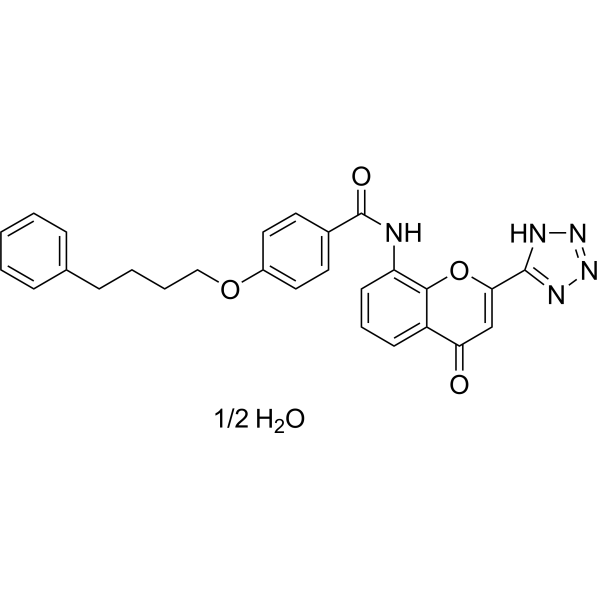 0 ImagesSynonyms: ONO-1078 hemihydratePranlukast hemihydrate is a highly potent, selective and competitive antagonist of peptide leukotrienes. Pranlukast inhibits [3H]LTE4, [3H]LTD4, and [3H]LTC4 bindings to lung membranes with Kis of 0.63±0.11, 0.99±0.19, and 5640±680 nM, respectively.
-
AS-35
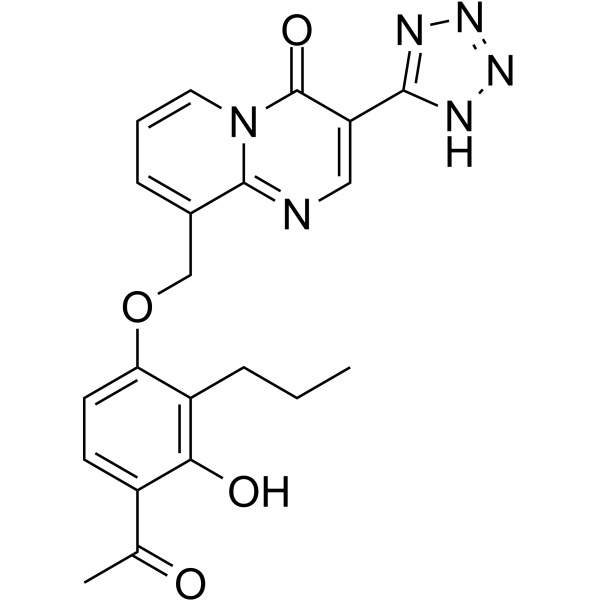 0 ImagesCat. No.: HY-101946CAS No.: 108427-72-1AS-35 is an orally effective, potent and selective antagonist of leukotrienes, antagonizes LTC4-, LTD4 and LTE4-induced contractions of the ileum with IC50 values of 8 nM, 4 nM and 3 nM, respectively, and has antiallergic activities.
-
MDL 43291
 0 ImagesCat. No.: HY-105483CAS No.: 129357-91-1MDL 43291 is a competitive leukotriene (LT) receptor antagonist. MDL 43291 antagonize LTD4 and LTE4 with pA2 of 6.7. MDL 43291 does not antagonize histamine, carbachol or substance P. MDL 43291 can be used for the researches of inflammation and immunology, such as asthma.



